

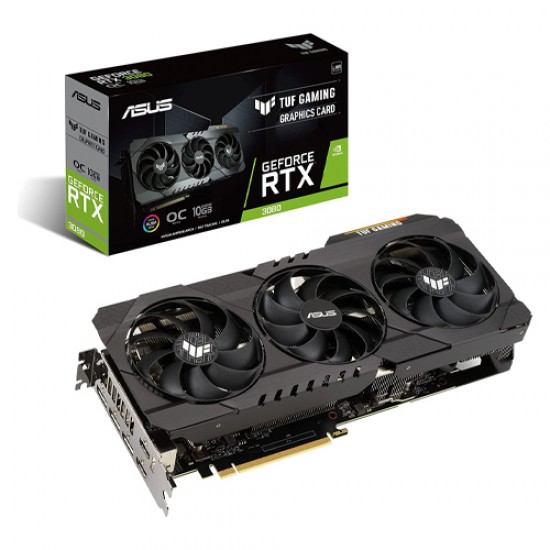
Asus TUF Gaming GeForce RTX 3080 V2 10GB GDDR6X Graphics Card
- Memory Size: 10GB
- Engine Clock OC Mode – 1815 MHz (Boost Clock)
- Memory Type: GDDR6X
- CUDA Cores (Nvidia): 8704
- Memory Bandwidth: (GB/Sec) 19 Gbps
Asus TUF Gaming GeForce RTX 3080 V2 10GB GDDR6X Graphics Card
Based On The Ampere Architecture And Designed To Handle The Graphical Demands Of 4K Gaming And High Frame Rates, The ASUS GeForce RTX 3080 TUF Gaming V2 OC Graphics Card Brings The Power Of Real-Time Ray Tracing And AI To Your PC Games. The GPU Features 10GB Of GDDR6X VRAM And A 320-Bit Memory Interface, Offering Improved Performance And Power Efficiency Over The Previous Turing-based Generation.
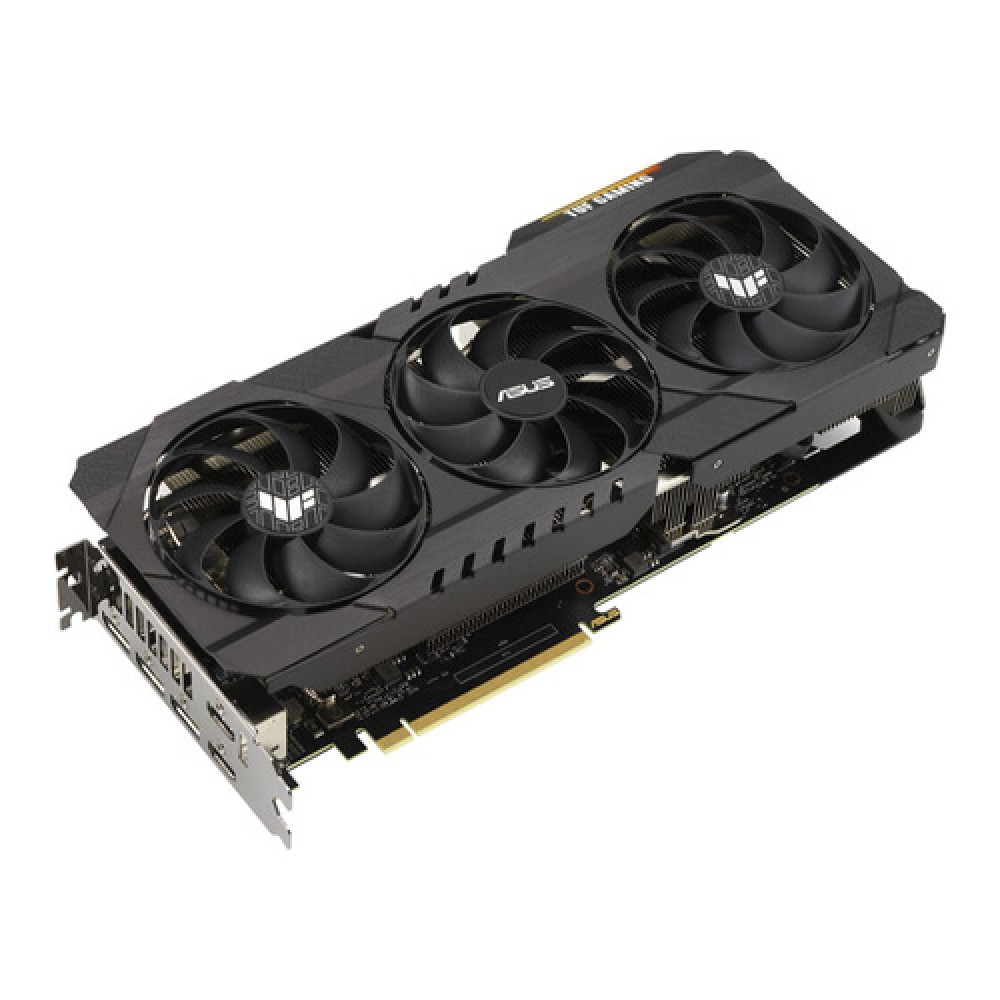
The Front Panel Of The Card Features A Variety Of Outputs, Such As DisplayPort 1.4a And HDMI 2.1. HDMI 2.1 Supports Up To 48 Gb/S Bandwidth And A Range Of Higher Resolutions And Refresh Rates, Including 8K @ 60fps, 4K @ 120fps, And Even Up To 10K. The RTX 3080 Is Not Just About High-Resolution Gaming. Computationally Intensive Programs Can Utilize The GPU’s 8704 Cores To Accelerate Tasks Using CUDA And Other APIs.
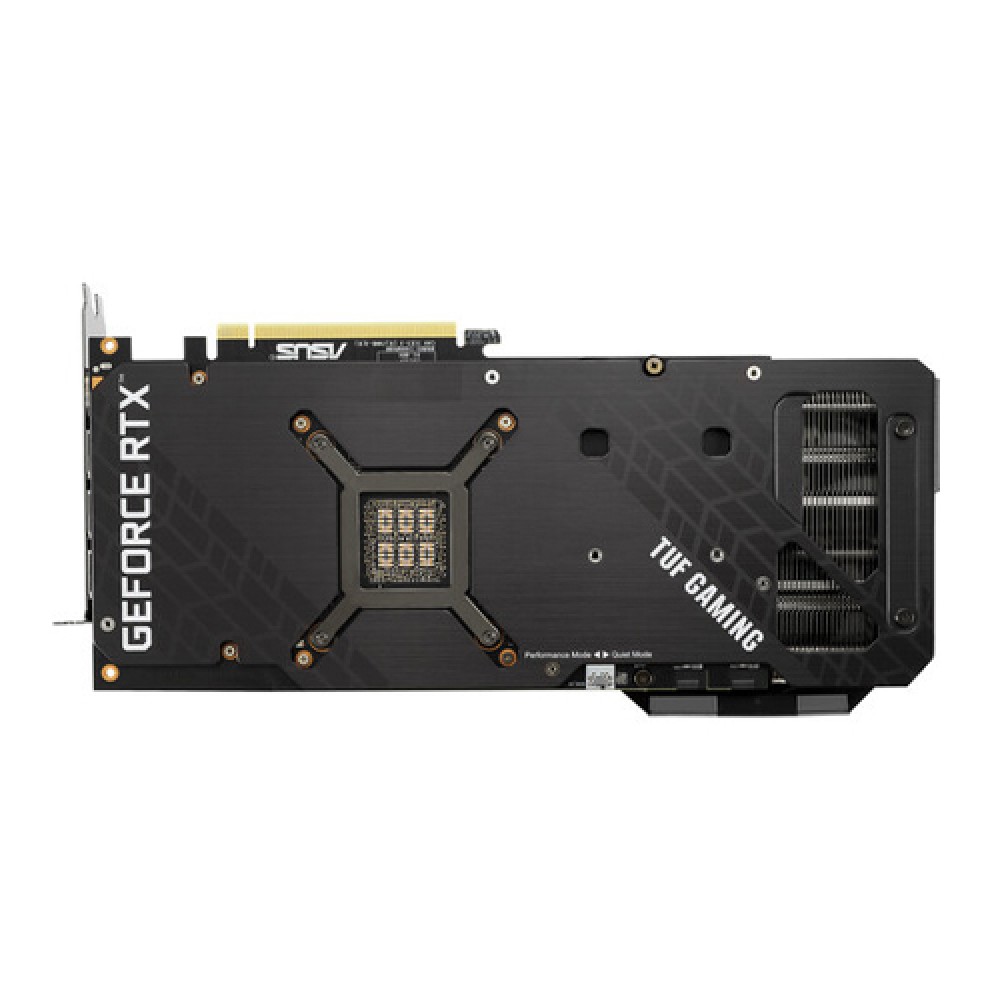
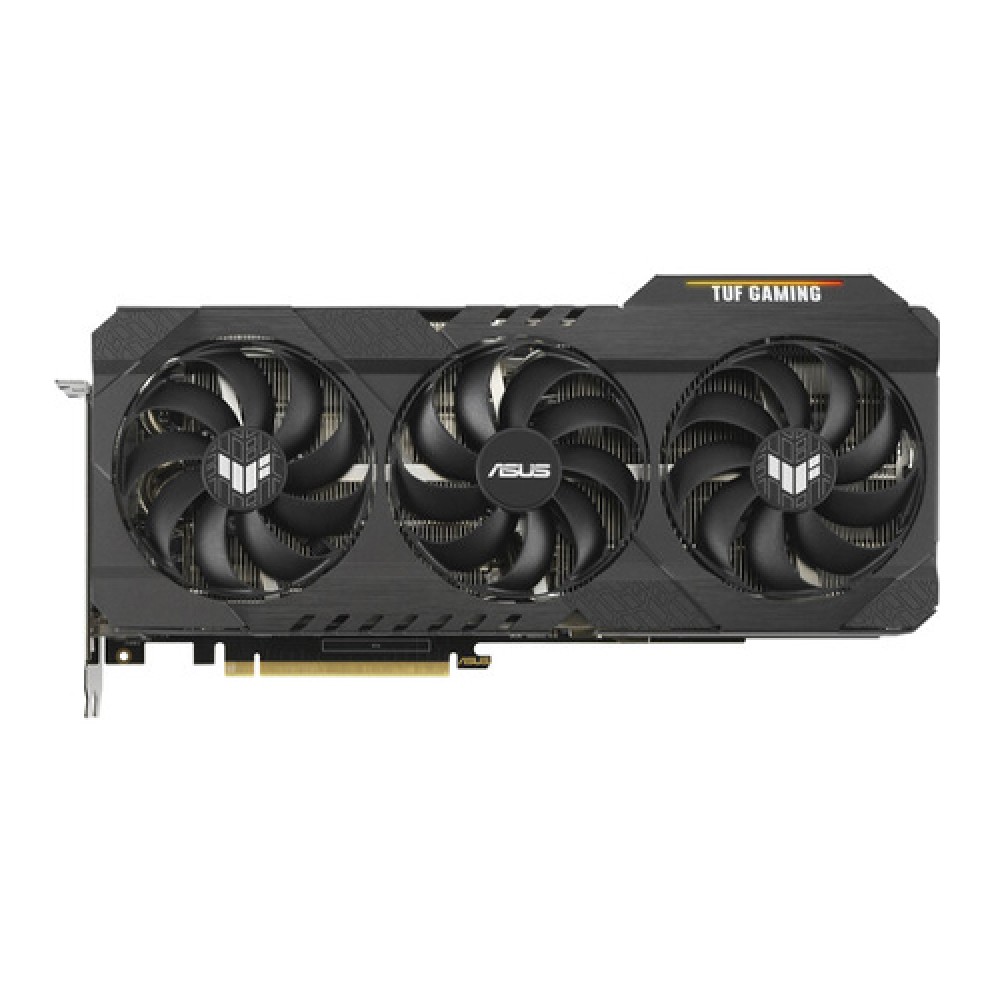
For Cooling, ASUS Implemented Triple Axial-Tech Fans, Providing Improved Airflow And Dispersion. There Is Also Aura Sync RGB Lighting On The Shroud And Backplate. Using Aura Sync Software, You Can Sync The RGB Lights With Other ASUS Products For A Customized Gaming Setup. With Aura Sync, You Can Sync To Music, Temperature-Based Color Changing, Or Select From A Variety Of Patterns And Static Options.
NVIDIA Ampere Architecture
NVIDIA Ampere Is The 2nd Generation RTX Architecture. It Features Up To Twice The FP32 Throughput, 2nd Gen RT Core Throughput, And 3rd Gen Tensor Core Throughput Of The Previous Generation. It Also Features A Samsung 8N Custom Process And Utilizes GDDR6X VRAM.
Real-Time Ray Tracing
The NVIDIA GeForce RTX Platform Enables Real-Time Ray Tracing Of Objects And Environments With Physically Accurate Shadows, Reflections, Refractions, And Global Illumination.
DLSS
NVIDIA DLSS (Deep Learning Super Sampling) Is AI Rendering That Boosts Frame Rates While Still Providing Optimal Image Quality Using The Dedicated AI Processing Tensor Cores On The GeForce RTX Platform. This Gives You The Performance You Need To Maximize Ray Tracing Settings And Resolutions For An Immersive Visual Experience.
HDMI 2.1
The HDMI 2.1 Interface Provides Increased Bandwidth, Allowing A Single Cable To Output To 8K HDR TVs For Ultra-High-Resolution Gaming.
Asus GeForce RTX 3080 V2 10GB GDDR6X Review
The ASUS TUF Gaming GeForce RTX 3080 OC is the company’s biggest bet on the TUF Gaming brand since its transformation from a hyper-durable motherboard label to a gaming-centric name targeted at gamers looking for durable, value-conscious products a few years ago. ASUS typically positions TUF Gaming below the coveted ROG brand. Over the past few years, we’ve seen the company design TUF Gaming graphics cards based on entry-thru-mainstream GPUs, but this is the first outing with an enthusiast-segment GPU, NVIDIA’s flagship GeForce RTX 3080 “Ampere,” which debuted earlier this month. ASUS directed considerable engineering efforts into making this a premium product with several practical features.
The GeForce RTX 3080 by NVIDIA, based on the Ampere graphics architecture, is the green team’s first new consumer graphics technology in two years, and an exercise at making real-time raytracing meet next-generation performance. NVIDIA took the bold step of introducing real-time raytracing to the gaming segment in 2018 with RTX—a technology that combines real-time raytraced elements, such as lighting, shadow, reflections, ambient occlusion, and global illumination, with conventional raster 3D scenes to significantly increase realism. With Ampere, NVIDIA is introducing its 2nd generation with even more RTX effects at better performance. The RTX 3080 is designed to make AAA gaming with raytracing at 4K UHD possible at 60 Hz, or with high refresh-rates at lower resolution.
The GeForce Ampere architecture introduces a new generation double-throughput CUDA core that can perform concurrent FP32+INT32 math. The new 2nd generation RT core doubles the BVH traversal and intersection performance over the previous generation and introduces new fixed-function hardware that enables newer RTX effects, such as raytraced motion blur. The 3rd generation Tensor core shares many design elements with its HPC cousin powering the A100 Tensor Core processor NVIDIA launched this spring, which leverages the sparsity phenomenon in deep-learning neural networks to double AI inference performance by an order of magnitude. NVIDIA heavily uses AI in its raytracing pipeline, and image-quality features such as DLSS. The new DLSS 8K feature takes a stab at 8K gaming by taking advantage of AI.
The new GeForce RTX 3080 features more than double the CUDA core counts than the previous-generation, with over 8,704 CUDA cores, 68 RT cores, 272 tensor cores, 272 TMUs, and 96 ROPs. All this compute muscle is fed data by an updated memory setup consisting of 10 GB of 19 Gbps GDDR6X memory across a 320-bit wide memory interface, which works out to 760 GB/s of bandwidth; that’s 70% higher than the previous generation. There are several other “next generation” bits, such as support for PCI-Express 4.0 x16 bus, the latest HDMI 2.1 and DisplayPort 1.4a connectivity, and AV1 video acceleration. NVIDIA built the GA102 over the 8 nm FFN process Samsung designed specially for NVIDIA.
Be the first to review “Asus TUF Gaming GeForce RTX 3080 V2 10GB GDDR6X Graphics Card”
Related products

Components
Components

Components
Components
Reviews
There are no reviews yet.