

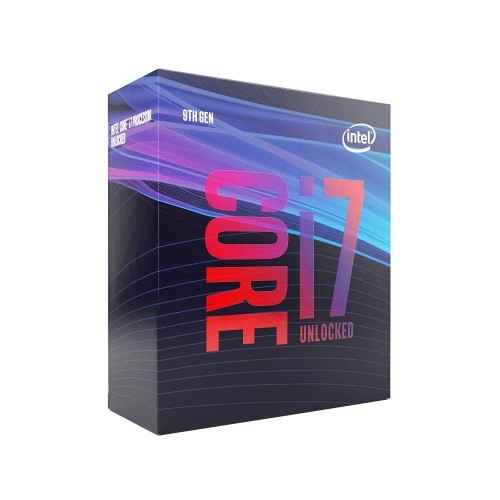
Intel Core i7 9700K 9th Generation Processor
Key Features
• Base Frequency 3.60 GHz
• 12M Cache
• 8 Core 8 Threads
• Sockets Supported FCLGA1151
Intel Core i7-9700K 9th Generation Processor
This Intel Core i7-9700K Processor fulfilling the expectation of a high-end, unlocked, Core i7 CPU by improving in few aspects from the previous generation. Like other 9th gen processors it also has eight physical cores. Tough its hyper-threading does not benefit much but it does not have any impact on performance. Eight cores encourage simultaneous working facility and higher turbo boost clock rates ensure strong single-threaded performance. It does not attach will any cooler, but solder TIM improves thermal transfer in effective way.
Intel Core i7-9700K Review
Equipped with 8-cores and 8-threads, the Intel Core i7-9700K is a bit of an oddity compared to its predecessor. this new chip has two more cores but four fewer threads.
The Intel Core i7-9700K is also rated with a base clock of 3.6GHz and can boost one its processor cores all the way to 4.9GHz. Comparatively, the Intel Core i7-8700K starts at a tick higher 3.7GHz base frequency, but can’t go nearly as fast with its maximum 4.7GHz boost clock.
For its latest 9th Generation chips, Intel is going with a soldered integrated heat spreader (IHS) – which we haven’t seen since 2nd Generation Sandy Bridge Core processors – to support greater overclocking capabilities.
For the last few generations of chips, Intel has gone with a Thermal Interface Material (TIM – aka thermal paste) to transfer heat between the processor dies and the IHS. Unfortunately, this change in manufacturing process seemingly resulted in hotter running processors, which infuriated many enthusiast users and overclockers.
In theory, this purported gold-plated solder replacing the TIM will be a much more efficient heat transfer medium. However, in our experience, the temperatures are pretty similar to what we got with the 8700K, though with higher power consumption and performance, we guess that means the soldered TIM does its job here.
Performance
Even though the Intel Core i7-9700K drops hyper-threading, it still manages to beat the 8700K, thanks to a higher TDP , or Thermal Design Power, and boosted single-thread performance. However, it fails to hold a candle to AMD’s offerings in most multi-threaded workloads.
For instance, in Cinebench R15, the 9700K managed to score 203 points in the single-core test, compared to the 8700K’s 193. This translates over to gaming performance, too, with the 9700K scoring 125 frames per second (fps) in Middle Earth Shadow of War at 1080p to the 8700K’s 121. That’s not a massive bump in gaming performance, but it’s a bump nonetheless.
Gaming performance jumps are more substantial when we compare the 9700K to the AMD Ryzen 7 2700X. In that same Shadow of War test, AMD’s processor only manages to hit 117 fps. Now, this is still very good performance, and no one is going to complain when they’re hitting nearly 120 fps, but it’s clear that Intel is still the king of gaming performance.
However, if you’re doing media creation, AMD is still the way to go. In the Cinebench multi-threaded test, the 9700K manages a score of 1,463 points to the 2700X’s 1,798. However, in Handbrake, Intel slightly pulls ahead with 66 fps to AMD’s 61.
So, while some people might have panicked when seeing Intel dropping hyper-threading, it doesn’t mean a lack of performance. And, if you’re playing the best PC games, the Intel Core i7-9700K is one of the best processors out there.
Be the first to review “Intel Core i7 9700K 9th Generation Processor”
Related products

Components
Components

Components

Components
Components
Components
Reviews
There are no reviews yet.